

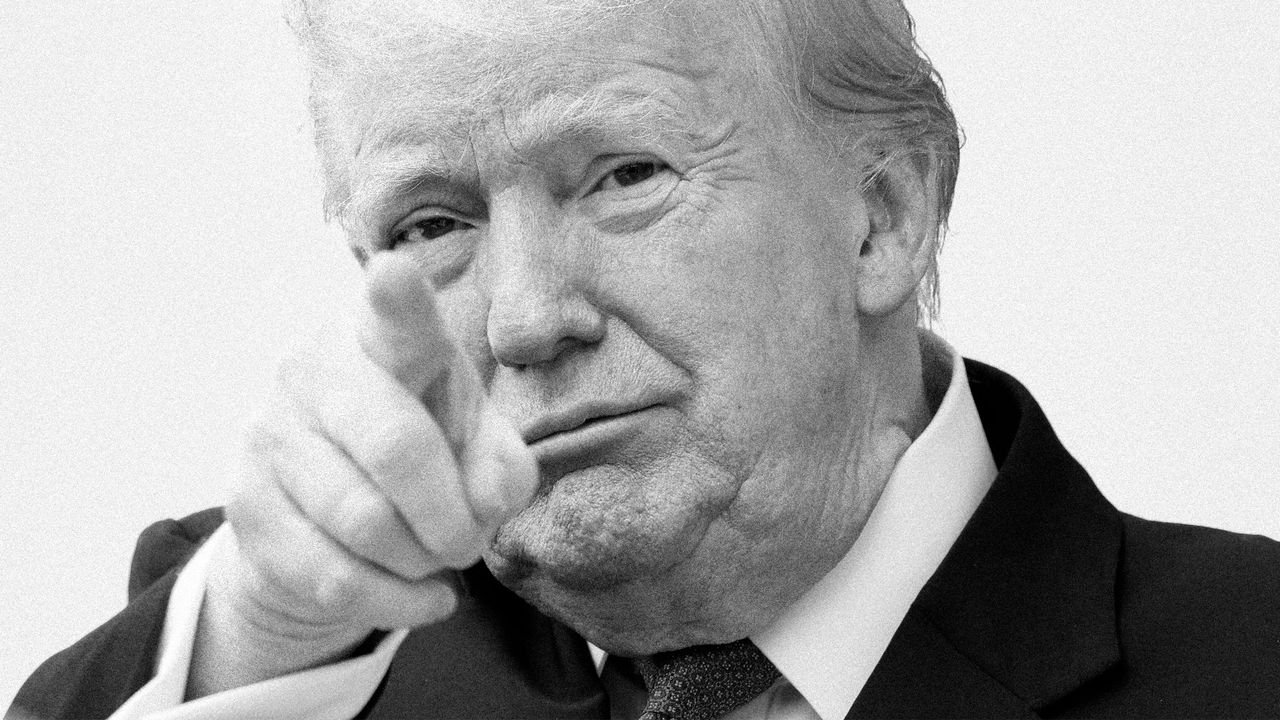
Sucking up to Trump is standard in Republican politics these days. What’s less certain—and what’s likely to determine both the Democratic nominee next week and the winner in November’s general election—is just how big a role Trump ends up playing with New Jersey voters.
The crowded field of Democratic contenders to succeed incumbent governor Phil Murphy, who is term-limited after eight years in office, has come at the Trump problem from a variety of angles. Steve Fulop, the mayor of Jersey City, has used a broad antiestablishment, policy-geek message to climb to second in recent polls, where he’s tied with Ras Baraka, the mayor of Newark, and Josh Gottheimer, a combative, centrist congressman.
Of the six candidates, Baraka is the furthest left, ideologically, and the most strenuously anti-Trump, stylistically. He recently visited a new federal migrant deportation facility and was arrested by Homeland Security agents; Baraka is now suing the interim US attorney for New Jersey, Alina Habba, a close Trump ally.
Regardless of whether Baraka intended to be detained, the confrontation earned him a bonanza of media attention. “I think he did a very smart thing by getting arrested,” says Julie Roginsky, a Democratic strategist who was the main architect of Murphy’s 2017 campaign before a bitter falling-out with his team. “It gave him a tremendous amount of national exposure at just the right time.” If Baraka wins, he will set up a polar general election contrast to the MAGA Ciattarelli.
The consistent Democratic front-runner, Mikie Sherrill, has so far pulled off a deft balancing act. The former Navy pilot was elected to Congress as part of the 2018 “blue wave” reaction to Trump’s first win. And during the current campaign, Sherrill has at times been dramatic in expressing her opposition to the president, appearing to wipe away a tear when speaking about immigration policy during a candidate forum at Rutgers University. “As a country, we’ve been really dedicated to the democratic ideals of delivering opportunity. That it doesn’t matter who your parents were or where you were born or how much money you have, but it’s what you can make of yourself,” Sherrill tells me just after shaking hands with voters at a diner in Hamilton Township while battling a migraine. “The Trump administration is trying to shut down those opportunities for people across the country and especially people here in New Jersey.”
Sherrill calls Trump “a huge factor” in the race, but she has been careful not to become a one-note anti-Trump candidate—regularly emphasizing, for instance, her plans to lower utility bills and housing costs. She has assembled formidable support from the state’s powerful county organizations; Sherrill has also come across as providing the closest thing to a continuation of Murphy’s agenda, a posture that could cut either way. “Anybody who wants to be governor is going to have to be strong and be willing to stand up to President Trump’s administration as they attack the things we care about here, willing to take them to court, as Jack Ciattarelli has vowed not to,” she tells me. “But at the same time, I think it’s incumbent upon the next governor to deliver for families, to drive down costs here.”
