

One scoop to start: KKR and Energy Capital Partners have struck an unusual multibillion-dollar partnership to build a giant data centre, in an effort to speed up the development of artificial intelligence infrastructure.
Welcome to Due Diligence, your briefing on dealmaking, private equity and corporate finance. This article is an on-site version of the newsletter. Premium subscribers can sign up here to get the newsletter delivered every Tuesday to Friday. Standard subscribers can upgrade to Premium here, or explore all FT newsletters. Get in touch with us anytime: Due.Diligence@ft.com
In today’s newsletter:
What David Ellison wants at Paramount
BC Partners suffers a CEO rebellion
Hedge fund stockpickers make a comeback
CBS, Trump and a tech scion
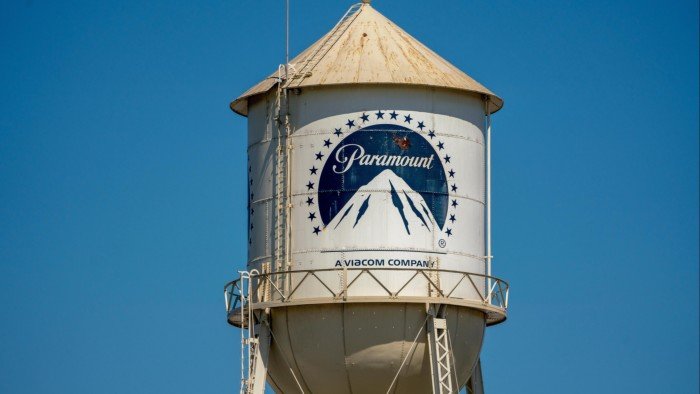
David Ellison has finally sealed his $8bn takeover of Paramount, but only after a year of boardroom battles and bloodletting that made it one of the most protracted media mergers in recent memory.
You need only watch last week’s episode of South Park, which landed on Paramount+, to see how divisive the deal has become.
The satirical comedy poked fun at the $16mn that Paramount had paid to settle a defamation lawsuit launched by Donald Trump against CBS News. (The US president was depicted in bed with Satan.)
It capped a turbulent spell for David Ellison, son of Oracle billionaire Larry Ellison, and drew him further into a political battle as Trump uses the Federal Communications Commission to assert control over the media.
The FCC approved the deal last week, after Ellison’s Skydance promised to scrap diversity programmes and monitor CBS for political bias.
People in the Ellison camp say the moves align with a “back to fundamentals” drive he plans for CBS.
One person close to Ellison said he planned to “bring back a performance-based culture” to the broadcast network, evoking “the days of [revered reporters] Edward R Murrow and Walter Cronkite”.
“Not quotas. Not ideology. Just objective journalism.”
Ellison has held talks with Bari Weiss, the former New York Times journalist turned media entrepreneur and fierce critic of “cancel culture”, about acquiring her start-up The Free Press. Weiss is seeking more than $200mn.
Executives and investors are looking at Paramount as a case study for what it takes to clear a media deal under the Trump administration.
Take, for example, Trump’s recent attack on Rupert Murdoch. Their rift could cause trouble if the elderly press baron looks to sell Fox or News Corp in the next few years, said Rich Greenfield, a partner at media research firm LightShed.
“Not having Trump on his side could make dissolution harder” for Murdoch, Greenfield said. “The FCC would need to sign off on a licence transfer for Fox’s broadcast stations, just like it did for CBS.”
The ordeal with Trump resolved for now, there is a far bigger issue on Ellison’s hands. After all, Paramount and its predecessor have struggled for years.
The economics of legacy broadcast networks, cable channels and movie studios continue to be pressured, meaning Trump was just Ellison’s first test.
A CEO revolt at BC Partners
A rebellion at one of BC Partners’ largest portfolio companies is gathering pace, as more United Group executives answer the rallying cry.
During an already difficult period for BC, it’s trouble that the private capital firm could do without.
In a memo sent this week to United Group’s board, eight operating company chief executives at the sprawling telecoms and media group gave BC Partners a grilling for running the business in a way that they say risks causing “long-term damage”.
It followed another letter sent last week by 14 senior managers at United, including the chief financial officer and chief operating officer.
They highlighted “deep concerns regarding the recent leadership changes” made by BC, which they said had caused a number of senior employees to resign, Bloomberg previously reported.
The ruckus comes after the United Group board’s firing of founder Dragan Šolak and chief executive Viktoriya Boklag in June.
While Šolak holds only a minority stake in United, he retains a degree of power. The Serbian-born billionaire has sole responsibility for awarding shares in United’s incentive plan to managers, the FT’s Euan Healy reported.
Šolak, the owner of English football club Southampton FC, has locked horns with BC Partners ever since his dismissal.
He’s sued the firm alleging he hadn’t been paid a €200mn bonus linked to the sale of some of the group’s assets and also called on Dutch authorities to investigate a “serious governance crisis” at United.
But BC Partners and United’s board are standing firm. BC Partners has said it would pay Šolak’s bonus, according to people familiar with the matter, while the Dutch court rejected his request to have the claims considered urgently.
United has said that Šolak’s complaints “solely serve the interests of Šolak, and not United Group”.
But as dissent intensifies, it’ll probably be down to the Dutch court to decide the company’s fate.
Stockpicking hedge funds roar back
A handful of hedge funds are once again making a killing.
Hedge funds that buy stocks they think will do well and bet against companies they think will underperform — known as equity long-short funds — are enjoying a comeback after a decade of outflows.
These funds have pulled in $10bn from investors this year, reversing a brutal decade that saw more than $120bn of withdrawals.
The bursts of volatility that have rocked financial markets in recent months — largely triggered by Trump’s oscillating trade policies — have minted a new class of high-flying stock pickers.
Among the biggest winners are Chris Hohn’s TCI, John Armitage’s Egerton and Mala Gaonkar’s SurgoCap Partners, which have each earned double-digit returns through the end of June.
“The stock picker’s market is back,” said Zlata Gleason, partner and head of client advisory at Indus Capital.
Other managers in the US have also put up big numbers.
Lee Ainslie’s Maverick and Daniel Sundheim’s D1 Capital Partners — both among the many offshoots of Julian Robertson’s famous hedge fund Tiger Management — gained 14 per cent and more than 20 per cent, respectively.
Long-short funds are one of the oldest and best-known sectors of the industry. They were pioneered by Alfred Winslow Jones, widely considered the first hedge fund manager, shortly after the second world war.
But it’s been a rough couple of years. The vicious equity sell-off in 2022 stung many of these fund that failed to deliver on their promise of superior protection for investors during downturns.
And in recent years, they’ve been overshadowed by the goliath multi-manager hedge funds, also known as “pod shops”, which dominate the sector and spread investments over several strategies.
There are also other forces at play. It’s helped stockpickers that the roster of S&P 500 companies are not so intensely dominated by big US technology stocks, as had been the case for many years.
“The world’s largest three or four companies are no longer dominating index returns,” said a second hedge fund executive in London. “So it’s a bit more of a stockpicker’s market.”
Job moves
Standard Chartered has named Jason Forrester as its group chief risk officer. He is currently co-head, chief risk officer, corporate and investment banking, and will replace Sadia Ricke.
Virtu Financial has appointed Aaron Simons as chief executive. He is currently chief technology officer and succeeds retiring CEO Douglas Cifu.
Citigroup has hired Arnould Fremy as head of UK, Europe and MEA transportation. He joins from UBS, where he was global head of transportation.
Eldridge has partnered with Fifth Third to offer private credit to commercial banks.
Smart reads
Dog days Novo Nordisk issued a profit warning this week, a far cry from a year ago when it was basking in the glow of Ozempic. What went wrong? asks the FT.
Lost generation Gen X workers are entering what should be the zenith of their careers, but they’re being passed over for C-suite roles, The Wall Street Journal reports.
Florida’s ultra-rich Palm Beach billionaires are buying up mansions, tearing them down and building ever bigger abodes as they vie for oceanfront space, The New York Times writes.
News round-up
Ukrainian oligarchs ordered to repay $1.9bn over bank fraud (FT)
JPMorgan-Coinbase partnership to facilitate crypto trading (FT)
Iveco to sell defence and truck units in deals worth €5.5bn (FT)
UBS profits double as strong trading revenue offsets investment banking weakness (FT)
Aberdeen hit with outflows as chief pushes on with turnaround (FT)
Adidas warns of €200mn tariff hit (FT)
Next buys brand rights to insolvent maternity group Seraphine (FT)
Japan’s Mitsui takes over Scottish port in boost for offshore wind sector (FT)
Due Diligence is written by Arash Massoudi, Ivan Levingston, Ortenca Aliaj, Alexandra Heal and Robert Smith in London, James Fontanella-Khan, Sujeet Indap, Eric Platt, Antoine Gara, Amelia Pollard, Maria Heeter, Kaye Wiggins, Oliver Barnes, Jamie John and Hannah Pedone in New York, George Hammond and Tabby Kinder in San Francisco, Arjun Neil Alim in Hong Kong. Please send feedback to due.diligence@ft.com
Recommended newsletters for you
India Business Briefing — The Indian professional’s must-read on business and policy in the world’s fastest-growing large economy. Sign up here
Unhedged — Robert Armstrong dissects the most important market trends and discusses how Wall Street’s best minds respond to them. Sign up here
